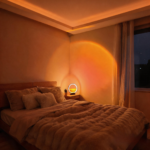
A bedroom is more than a place to lie down. It is the stage on which every night’s sleep performance unfolds.
Even if you follow perfect sleep routines—avoiding screens, keeping a consistent bedtime, managing stress—your environment can quietly undermine your efforts.
A relaxing bedroom setup is not about expensive décor or luxury items. It’s about subtle cues that communicate safety, calm, and comfort to your nervous system. These cues help your body gradually transition into deep, restorative sleep.
Here are five practical ways to optimize your bedroom for better sleep.
1. Warm, dimmable lighting
Light is the single most powerful cue your brain uses to determine day and night. Exposure to bright, cool-toned light at night can delay melatonin production, leaving you alert when your body is ready to rest.
Instead, a gentle, warm glow signals “evening time” and allows your body to start winding down naturally.
👉 Recommended tool:
- Sunset Lamp – emits soft warm light, gradually dimmable, ideal for pre-sleep winding down.
Tips for use:
- Keep overhead lights off or dimmed in the hour before bed
- Use bedside lamps instead of bright ceiling lights
- Consider programmable lamps to mimic natural sunset transitions
2. Stable background sound
Sudden noises—sirens, traffic, neighbors—can fragment sleep without fully waking you. Over time, these micro-arousals reduce deep sleep cycles and leave you feeling unrested.
White noise creates a consistent auditory backdrop, helping the brain filter out disruptive sounds.
👉 Recommended tool:
- White Noise Machine – provides a steady, calming sound environment; especially useful for urban dwellers or light sleepers.
Tips for use:
- Set volume to a level slightly louder than background noise, but not too high to disturb
- Choose neutral tones (rain, fan, or static) instead of melodic sounds that might engage attention
3. Ergonomic support for the body
Sleep quality depends not just on the mind, but on physical comfort. Even small misalignments in the neck, shoulders, or spine can lead to micro-awakenings.
Investing in supportive tools can prevent tension from creeping into your sleep cycle.
👉 Recommended tools:
- Memory Foam Neck Pillow – supports natural cervical alignment
- Butterfly Neck Pillow – C-shaped adjustable for side or supine sleepers
Tips for use:
- Match pillow type to your primary sleeping position
- Check firmness: too soft fails to support; too hard may create pressure points
4. Maintain air quality and comfort
Room temperature and humidity affect sleep quality more than most people realize. Dry air, dust, or stagnant airflow can cause discomfort, snoring, or restless tossing.
Adding a small, quiet humidifier or diffuser can make a noticeable difference in comfort and breathing.
👉 Recommended tools:
- Air Humidifier – helps maintain optimal humidity
- Optional: add a few drops of relaxing essential oils like lavender for calming aromatherapy
Tips for use:
- Keep the humidifier away from direct body contact to avoid dampness on bedding
- Clean it regularly to prevent mold and bacteria buildup
5. Reduce visual clutter
Your brain responds to visual stimuli even when you think you’re “turning off.” A messy room creates subconscious tension, signaling “unfinished business” or overstimulation.
Simple organizational tools can help maintain a calm visual field and support sleep readiness.
👉 Recommended tools:
- Cable Management Box – hides cords and electronics
- Storage Organizer – keeps personal items neatly arranged
Tips for use:
- Keep nightstand surfaces minimal
- Store items out of sight where possible
- Remove electronic devices from view
Final thoughts
A relaxing bedroom setup is not a luxury—it is a foundation for restorative sleep.
Small adjustments in lighting, sound, comfort, and organization can transform nightly rest from “adequate” to truly restorative.
By combining ergonomic support, calming light, consistent sound, optimal air quality, and visual simplicity, your bedroom becomes a sanctuary that signals your body it is time to let go and recharge.